 Jackie Arnold MBE
 Harry Askew
  Professor Stephen Bailey
 Sir Frank Barlow
 Reg Bazley
 Norman Birkett, 1st Baron Birkett
.jpg) Bob Birrell
Bob Birrell Joe Birrell
 William Rushton Black - Baron Black of Barrow-in-Furness
 Chris Blackhurst
 Tom Brophy
 Philip Martin Brown
 Bill Burgess
 Maurice Chapman
 Glenn Cornick
.jpg) Gordon Fallows
Gordon Fallows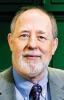 Graham R Fleming
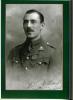 Lieutenant William Thomas Forshaw VC
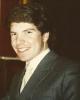 Philip Geddes
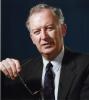 Jim Glasgow
 Dr. Derrick Gould
 Richard Oliver Gross
 Michael Harper
 Michael Hart
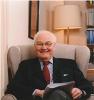 Jack Lewis, Baron Lewis of Newnham
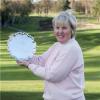 Janet Melville
 James Mossop
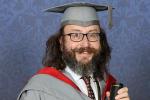 Dave Myers
 Alan Parker
 Ivor Porter
 Peter Purves
 Sir Leonard Redshaw
 Dr. Elizabeth Roberts
 Bill Rollinson
 Dame Philippa Russell
 Tony Shearer
 Glenn Skivington
 Commander Joseph Stenhouse
 Gary Stevens
 Peter Stevens
 Professor Marshall Stoneham
 Peter Strike
 Professor Colin Talbot
  David Tattersall
 John Tovey
 When Dave Myers met John Tovey
 Don Trangmar
 David Turner
 Gary Westwood
 Dr. Thomas Wood
 The schools
  Association Presidents
  Looking for old classmates?
  Alumni - former pupils and staff of note
  Old Barrovian
  Outward Bound - the old school song
  All change!
  4th Nov. (London) 18th Nov. (Barrow) Come along to meet old friends and make some new ones
  BEM for Dennis
  Old Boy Joe makes the news!
  Come and join us
  Pictures
  News of former pupils and staff
 .jpg) Boys' School Heads
Boys' School Heads 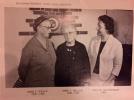 Girls' School Heads
  Signs of the times
  Old Boy honoured by the King
  Old Boy to take on Benidorm 10k
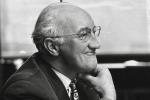
Sir Leonard rose from shop floor to become the manager of Barrow Shipyard and for 25 years was “probably the most important shipbuilder in England ...... in the post-war period”
A pioneer in Britain of welded submarine and ship construction, under his command, the Vickers Barrow shipyard launched the world’s first all-welded passenger liner; the first British liner having all-welded aluminium superstructure; Britain’s first nuclear submarine; the nation’s first Polaris submarine; the first 100,000 ton tanker built in Europe; the first Type 42 destroyer; and the Royal Navy’s first command cruiser.
He was knighted in 1972 for services to exports. He further initiated Vickers’ diversification into offshore and subsea engineering.
Possessed with foresight, a decision maker, and self confident, he led from the front particularly so in a crisis.
When the Oronsay caught fire in the dock it was Sir Leonard’s forceful management and organisation of the 150 firemen and employees, that saved the ship from serious damage. Even then it was only delivered eight weeks late.
In November 1954, after the Barrow built tanker World Concord broke its back in the Irish Sea, Sir Leonard ordered a plane to collect him. It flew him to the stricken ship in storm conditions, to ensure all the crew would be saved.
Sir Leonard was also an out-spoken antagonist regarding the nationalisation of the shipbuilding industry in 1976. Nationalisation took from Vickers Limited its aircraft and shipbuilding interests, which, since privatisation, BAE Systems has reunited.
In 1969, he secured from the Ministry of Defence its commitment to Barrow as the sole yard for British nuclear submarine construction.
Away from work and his family, Sir Leonard’s abiding passion was gliding, where he was simply known as ‘Len’.
He started his interest in gliding in 1930 following his father who was a founder trustee of the original Furness Gliding Propriety Ltd, better known as the Lakes Gliding Club. His brother, son, daughter and son-in-law all became keen gliding enthusiasts. The grandsons however were not enticed to stay in the sport. His family have probably one of the longest relationships with gliding in the UK.
Despite being a busy man Len found time on Sundays to act as CO of 188 Gliding School teaching pre-entry RAF cadets.
“Whist I was researching welding on a course in London I spent most Sundays gliding at Dunstable. One day I visited my great aunt in Tolworth, Surrey . This was about 1933 and I met a brunette who lived next door. She seemed to be suitable material for a wife. Unfortunately I only had two weeks to convince her that we should develop a long term friendship. We married in 1939 and when I thought we were winning the war we had a daughter in 1942 and a son in 1944. They turned out to be a first class crew for gliding competitions. Post war every summer holiday for many years was spent entering National and Regional competitions.”
He had gained a local reputation as the only man in Cumbria to have a glider and be able to catapult off the local fells with his family’s assistance. He remained with gliding up to 1982 and was chairman of the Lakes GC for many years.
Len pioneered the worlds first GRP glider with a carbon fibre main spar which incidentally he then test flew at the age of 62 for about six months.
As a sportsman he enjoyed rugby, tennis, cricket, fishing, swimming, boating and occasionally golf playing for his school, university and company with great enthusiasm.
However his number one sporting love remained gliding with over 3000hrs flown in his own aircraft.