 Jackie Arnold MBE
 Harry Askew
  Professor Stephen Bailey
 Sir Frank Barlow
 Reg Bazley
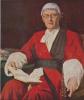 Norman Birkett, 1st Baron Birkett
.jpg) Bob Birrell
Bob Birrell Joe Birrell
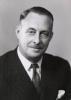 William Rushton Black - Baron Black of Barrow-in-Furness
 Chris Blackhurst
 Tom Brophy
 Philip Martin Brown
 Bill Burgess
 Maurice Chapman
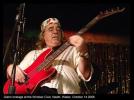 Glenn Cornick
.jpg) Gordon Fallows
Gordon Fallows Graham R Fleming
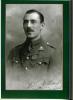 Lieutenant William Thomas Forshaw VC
 Philip Geddes
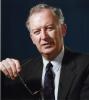 Jim Glasgow
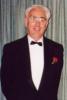 Dr. Derrick Gould
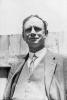 Richard Oliver Gross
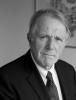 Michael Harper
 Michael Hart
 Jack Lewis, Baron Lewis of Newnham
 Janet Melville
 James Mossop
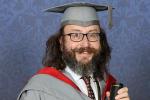 Dave Myers
 Alan Parker
 Ivor Porter
 Peter Purves
 Sir Leonard Redshaw
 Dr. Elizabeth Roberts
 Bill Rollinson
 Dame Philippa Russell
 Tony Shearer
 Glenn Skivington
 Commander Joseph Stenhouse
 Gary Stevens
 Peter Stevens
 Professor Marshall Stoneham
 Peter Strike
 Professor Colin Talbot
  David Tattersall
 John Tovey
 When Dave Myers met John Tovey
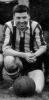 Don Trangmar
 David Turner
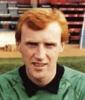 Gary Westwood
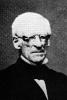 Dr. Thomas Wood
 The schools
  Association Presidents
  Looking for old classmates?
  Alumni - former pupils and staff of note
  Old Barrovian
  Outward Bound - the old school song
  All change!
  4th Nov. (London) 18th Nov. (Barrow) Come along to meet old friends and make some new ones
  BEM for Dennis
  Old Boy Joe makes the news!
  Come and join us
  Pictures
  News of former pupils and staff
 .jpg) Boys' School Heads
Boys' School Heads  Girls' School Heads
  Signs of the times
  Old Boy honoured by the King
  Old Boy to take on Benidorm 10k
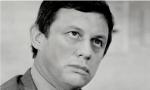
Peter Stevens 1932-2016 (BBGS 1943-1949)
Son of Joseph, a publican, and his wife, Gwen, Peter was born in Barrow-in-Furness, Cumbria, and educated at the Barrow Boys' Grammar School. He graduated in English from Nottingham University, taking up regular places in both the university First XV and its dance orchestra.
After graduation he spent time commissioned by the RAF in Suez and Aden and then as an education officer to schools for the children of service personnel. When he returned to his alma mater in 1959 as associate registrar in the applied science faculty, Stevens left after a year to join the British Council, based in northern Nigeria.
He developed formidable negotiating and organisational skills that would prove so vital in his role as general administrator of the National Theatre during Peter Hall’s years as its director. Hall and Stevens made a redoubtable team – later with Michael Birkett as deputy director – throughout most of the 1970’s. Theirs became a turbulent era in an often mean-spirited decade.
In 1963 John Nevillenand Judi Dench headed a Nottingham Playhouse company on a British Council-sponsored west African tour which almost immediately faced a crisis when the company manager fell seriously ill. Stevens was delighted to help out by taking over and guiding the company through the rest of the tour.
Stevens went to work for Granada Television, not only producing the weekly local liveOn Site programme but also commissioning and leading the opening of the relatively short-lived but hugely influential Stables Theatre Club near the Granada studios in Manchester. It was a lively hub for staff and writers such as Henry Livings and Jack Rosenthal, as well as a thriving theatre space which saw early performances from actors including Maureen Lipman.
When he took over the NT from Laurence Olivier in 1973, Hall found the move from the Old Vic to Denys Lasdun’s South Bank concrete complex faced a nightmare period of delays and obstacles. By 1975, of the building’s three spaces, only the Lyttelton auditorium was proceeding well and Hall listened to Stevens; after successful outdoor performances on the NT terraces he decided to start regular Lyttelton productions in early 1976 despite opposition from his chairman, Max Rayne, and contractors alike.
As the Hall years ended on the South Bank, Stevens’s life also underwent a change. His first marriage, to Dolly Price (whom he had married in 1955), ended in divorce and in 1979 Stevens married Rochelle Levine, who had been his PA at the NT, and later became a literary agent. For a time they were based in Manhattan, New York, where Stevens became a vice-president of the mighty Shubert Organization, his role primarily to administer transfers from London (Shaffer’s 1979 play Amadeus, with which Stevens was heavily involved, continued the Shubert’s connection with the NT) and to expand the empire’s range of productions. Also for the Shuberts, he produced the West End version of their Broadway success The Gin Game (Lyric, 1979).
Stevens enjoyed his spell (1982-84) as chief executive of the London Tourist Board, radically restructuring the organisation. Under the aegis of his own company, Umbrella Productions, he worked once again for Granada Television, taking on as executive producer the ambitious series Man and Music, a social history of music.
He had a happy return to the theatre in the early 90s when he was appointed managing director of Chichester Festival theatre, working harmoniously with its director, Patrick Garland, and in 1994 leaving the organisation in sound financial strength.
After many years in Islington, north London, he and Rochelle latterly happily returned to his first and favourite London patch Peckham. Even when he was over 80 the theatre continued to absorb him; he cut a striking figure, still lively in conversation and with some pungent anecdotes, when he joined the guests on the South Bank for the NT’s 50th in 2013.
Peter died unexpectedly but peacefully at home on Friday 3rd June 2016, aged 83.
Stevens’s eldest son, Max, predeceased him. He is survived by his wife Rochelle, three children, Deborah, Joe and Miriam, from his first marriage, and by his sister, Patricia, and brother John.