 Jackie Arnold MBE
 Harry Askew
  Professor Stephen Bailey
 Sir Frank Barlow
 Reg Bazley
 Norman Birkett, 1st Baron Birkett
.jpg) Bob Birrell
Bob Birrell Joe Birrell
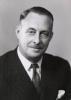 William Rushton Black - Baron Black of Barrow-in-Furness
 Chris Blackhurst
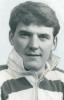 Tom Brophy
 Philip Martin Brown
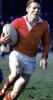 Bill Burgess
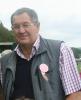 Maurice Chapman
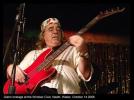 Glenn Cornick
.jpg) Gordon Fallows
Gordon Fallows Graham R Fleming
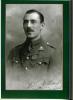 Lieutenant William Thomas Forshaw VC
 Philip Geddes
 Jim Glasgow
 Dr. Derrick Gould
 Richard Oliver Gross
 Michael Harper
 Michael Hart
 Jack Lewis, Baron Lewis of Newnham
 Janet Melville
 James Mossop
 Dave Myers
 Alan Parker
 Ivor Porter
 Peter Purves
 Sir Leonard Redshaw
 Dr. Elizabeth Roberts
 Bill Rollinson
 Dame Philippa Russell
 Tony Shearer
 Glenn Skivington
 Commander Joseph Stenhouse
 Gary Stevens
 Peter Stevens
 Professor Marshall Stoneham
 Peter Strike
 Professor Colin Talbot
  David Tattersall
 John Tovey
 When Dave Myers met John Tovey
 Don Trangmar
 David Turner
 Gary Westwood
 Dr. Thomas Wood
 The schools
  Association Presidents
  Looking for old classmates?
  Alumni - former pupils and staff of note
  Old Barrovian
  Outward Bound - the old school song
  All change!
  4th Nov. (London) 18th Nov. (Barrow) Come along to meet old friends and make some new ones
  BEM for Dennis
  Old Boy Joe makes the news!
  Come and join us
  Pictures
  News of former pupils and staff
 .jpg) Boys' School Heads
Boys' School Heads 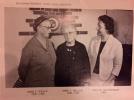 Girls' School Heads
  Signs of the times
  Old Boy honoured by the King
  Old Boy to take on Benidorm 10k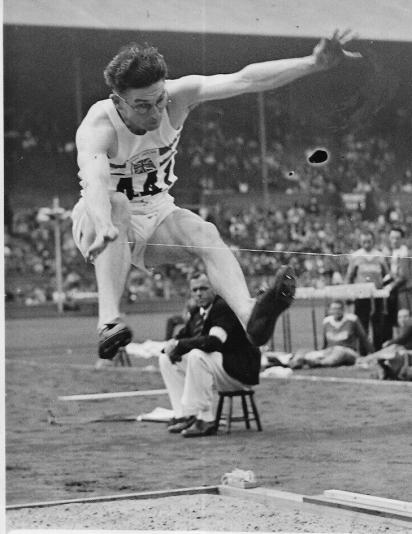
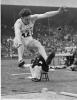
Henry Edward (Harry) Askew, 31 December 1917 – 31 October 1986, former pupil of Barrow Grammar School for Boys, was selected to represent Great Britain in the Long Jump at the 1948 London Olympics. He came 9th in the final with a jump of 6.935m. At school he excelled at Sprinting, only moving on to the Long Jump whilst at Cambridge.
Harry Askew would have been 30 years of age at the time of this ultimate athletics test. He stayed in Hammersmith during the games and travelled to White City, where the athletics took place, by bus, even on the day of the final.
At the time the holder of the World Record and reigning Olympic Champion was the great American athlete, Jesse Owens.
Old Barrovian Joe Birrell also competed at the 1948 Olympics, in the 110m Hurdles.
Askew started his climb to athletics stardom at Barrow Grammar School for Boys, and pursued it further at Gonville & Caius College, Cambridge.
Pre-war, Harry won the 1937 Oxbridge Sports long jump and 2 years later the UAU title and was second in the AAA Championships.
The war interrupted Harry’s career. He spent six years in the army with the Royal Corps of Signals, achieving the rank of captain. After the war, he moved to Jersey to teach.
He taught at Victoria College in Jersey for a period just after World War II and by 1952 had moved to Essex. He was instrumental with others in forming the Jersey Athletics Club.
Harry Askew, like all members of Cambridge University Athletic Club who compete against Oxford, was invited to become a member of the Achilles Club whose aim is to maintain and strengthen friendships made from the rivalries in sport between the two seats of learning.
Askew went on to teach and coach in Essex. He improved his personal best to 7.29m in 1949 and in 1950 won the AAA title, the British championship, aged 32.
In 1958, the Askew family moved north in order that Harry could take up a position as head of Heaton Grammar School.
Despite being a vociferous opponent of comprehensive education, he was appointed head of Heaton School, Heaton’s new coeducational comprehensive in 1967.
Askew achieved more national and even international fame than for his Olympic achievements in 1976 when his controversial response to the newly enacted Equal Opportunities Act was to announce that, henceforward, girls would be subject to corporal punishment on the same basis as boys i.e. liable to receive it. Parents and pupils organised a protest and alerted the media. There was damage to the school, assaults, expulsions, and court cases.
The dust settled, however, and Harry Askew eventually retired in 1979 after 21 years in post. On his retirement he told the ‘Journal’. ‘Do you know, I still have my jumping shoes, my England vest and tracksuit? I couldn’t bear to part with them, although today I can hardly get my feet off the ground unless it’s to put them up in front of the television set!’
Harry Askew and his wife moved south on his retirement to be closer to family. He was looking forward to having more time for his passion for jazz music – he was a talented pianist – and for gardening. He died on 31 October 1986, aged 68.