 Jackie Arnold MBE
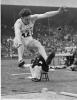 Harry Askew
  Professor Stephen Bailey
 Sir Frank Barlow
 Reg Bazley
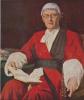 Norman Birkett, 1st Baron Birkett
.jpg) Bob Birrell
Bob Birrell Joe Birrell
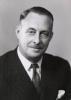 William Rushton Black - Baron Black of Barrow-in-Furness
 Chris Blackhurst
 Tom Brophy
 Philip Martin Brown
 Bill Burgess
 Maurice Chapman
 Glenn Cornick
.jpg) Gordon Fallows
Gordon Fallows Graham R Fleming
 Lieutenant William Thomas Forshaw VC
 Philip Geddes
 Jim Glasgow
 Dr. Derrick Gould
 Richard Oliver Gross
 Michael Harper
 Michael Hart
 Jack Lewis, Baron Lewis of Newnham
 Janet Melville
 James Mossop
 Dave Myers
 Alan Parker
 Ivor Porter
 Peter Purves
 Sir Leonard Redshaw
 Dr. Elizabeth Roberts
 Bill Rollinson
 Dame Philippa Russell
 Tony Shearer
 Glenn Skivington
 Commander Joseph Stenhouse
 Gary Stevens
 Peter Stevens
 Professor Marshall Stoneham
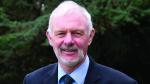 Peter Strike
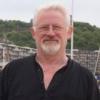 Professor Colin Talbot
 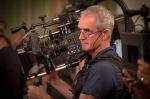 David Tattersall
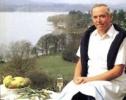 John Tovey
 When Dave Myers met John Tovey
 Don Trangmar
 David Turner
 Gary Westwood
 Dr. Thomas Wood
 The schools
  Association Presidents
  Looking for old classmates?
  Alumni - former pupils and staff of note
  Old Barrovian
  Outward Bound - the old school song
  4th Nov. (London) 18th Nov. (Barrow) Come along to meet old friends and make some new ones
  All change!
  BEM for Dennis
  Old Boy Joe makes the news!
  Come and join us
  Pictures
  News of former pupils and staff
 .jpg) Boys' School Heads
Boys' School Heads 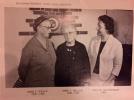 Girls' School Heads
  Signs of the times
  Old Boy honoured by the King
  Old Boy to take on Benidorm 10k
Joe Birrell (born 11 March 1930) was a British hurdler. He competed in the men's 110 metres hurdles at the 1948 Summer Olympics, the same games as Old Barrovian Harry Askew, who competed in the Long Jump.
Joe Birrell recalled the occasion for the Sunday Times:
“It was a massive honour to represent my country in the 110m hurdles at the 1948 Olympics. Two of my three younger siblings played sport: my sister June-Mary was an England hockey player; my brother Bob competed in the sprint hurdles at the 1960 Rome Olympics. I had hurdled successfully at junior level. Then my headmaster in Barrow (Sam Price) entered me into the 1948 Northern Counties senior championship, a meeting I managed to win. From there, I won a national meeting at White City, on the 1908 Olympics track, which had no starting blocks. You had to dig a hole with a trowel.
"My Olympic invitation arrived, in the post, only a fortnight before the Games. Once selected, I travelled to London by train; it was an eight-hour journey. I was wearing the lucky pair of shorts my mum had made and a pair of spikes the school had bought. Not surprisingly, I wasn’t considered to have any chance of winning.
"At the Olympics we had to use starting blocks, which I had never seen before. And I had never run on a proper cinder track. I came fourth in my first-round heat at Wembley, my fourth race at international senior level.
"Injury stopped me competing at the 1952 Games. Ten years earlier I pulled a groin muscle in the high jump at school. This was a recurring problem and the pain returned when I trained at Loughborough in advance of the Helsinki Games. The National Health Service doctors I relied on then would simply say: “Just rest it.”
"The opening ceremony sticks out. It was an incredibly hot day. At Wembley, the British team, as the host country does, marched out last. Thousands of pigeons were released in celebration — we later learnt they had been pinched from Trafalgar Square! The best thing was the really great food parcels we received. This was the time of rationing, remember, and to a certain extent some of us probably ate too much.
"After the games I completed my national service in the army. I married Marjory Jacobs in 1959 and we moved to Uganda and Kenya, where I taught PE and Maths for 10 years.
"When I lived in Uganda, I ended up running the national basketball team. One day, in the late 1960s, Idi Amin, a few years before he became president, asked me to teach him. For 40 minutes, with his entourage watching, he shot at the basket; he would miss and I’d have to rebound the ball into the net. “This is marvellous,” he said. “I want you to coach my army to do this.” Now, I’d known of an American peace corps soldier who had refereed one game with that army and was beaten up when he tried to reason with them about the rules. Thankfully, three weeks after I met Amin, I went to the UK on two months’ leave. By the time I returned to Uganda, he had forgotten.
On returning to the UK I taught at Lancaster Royal Grammar until 1990”.
Joe was registered blind and died in November 2024 at the age of 94.
This is the report from the Evening Mail:
JOE Birrell, one of two Olympic hurdling brothers, has passed away at age 94.
Born in Barrow in 1930, Joe ran in the 110 meters hurdles at the London Olympics in 1948 at the tender age of 18.
Also competing in the long jump was Old Barrovian Harry Askew.
Joe was Born in Barrow along with brothers Bob, Jack and sister June and a family achievement came in 1960 when younger brother Bob competed in the 110 meters hurdles for Great Britain in Rome.
Bob died earlier this year aged 86.
Joe attended St James’s junior school before being educated at Barrow Grammar school where his school master Sam Price entered him into the Northern Counties athletics event and, Joe came up trumps becoming Senior Champion
June said: “The Birrell family was brought up in Anson Street (Hindpool), but during the war their house was bombed, however they escaped injury.
“Jack and Joe were evacuated to Workington. When the family were reunited they moved to North Row in Roose as their Anson street house was unfit to live in.
“All four of us really enjoyed our younger days at Roose.”
In 1945, Joe was Grammar school high jump champion a record he held till 1954 when local all-round athlete Ray Hewson equalled the high jump record.
In 1947, aged 17 Joe was crowned England Junior AAA (Amateur Athletics Association) champion.
One year later Joe became the first recipient of the AAA best junior athlete of the season.
Joe only received the invitation to hurdle in the 1948 Olympics two weeks before the games took place.
He travelled to London by train which took eight hours from Barrow.
For the first time Joe started the race using starting blocks which were entirely new to him.
When Joe returned from the Olympics a cricket benefit game took place for him and he received a new suitcase and a set of starting blocks from the Chief Constable of Barrow who was Chairman of Barrow Athletic Club.
The Grammar school bought him a Silver watch and the Methodist church a gold watch.
He also ran an exhibition race so people could actually see him hurdling thousands turned up to see him.
In the build up to the games in London thousands of pigeons were released to celebrate the occasion.
He missed out in the 1952 Olympics in Helsinki due to an old groin injury from ten years previous.
However, another Barrovian, Alan-Bunyard-Parker took part in the 5,000 meters alongside the great Egyptian runner Emil Zatopek.
In 1957, he won the Lancashire hurdling title.
Following the games, Joe completed his National service with the British Army.
He went to Loughborough University to become a Physical Education teacher and taught at a school in the Midlands before he returned home At Barrow Grammar school where he taught PE.
One of his pupils was younger brother Bob and they both loved the experience.
He later married his wife Marjory Jacobs in 1959. He then moved abroad to Uganda and Kenya where for 10 years he taught PE and ran a basketball team where he met with Idi Amin who later became President of Uganda.
On his return to the UK, he took up a teaching appointment at the Royal Lancaster Grammar school where he retired in 1990.
A hat-trick of national Birrell achievements was completed with sister June playing Hockey for England.
June added: “All four of us were sports minded, Jack was captain of Notts University cricket team, and also played for the Navy.
“In Barrow he was captain of Roose who won the Vigodney Cup on several occasions.”
A funeral service will take place at Lancaster and Morecambe Crematorium on Monday, December 23, at 11-30am.